







Organized Crime Becomes a Daily Reality in Peru, New Report Warns
A human rights report in Peru warns that organized crime has been normalized nationwide and calls for structural reforms to rebuild security institutions and protect democracy.
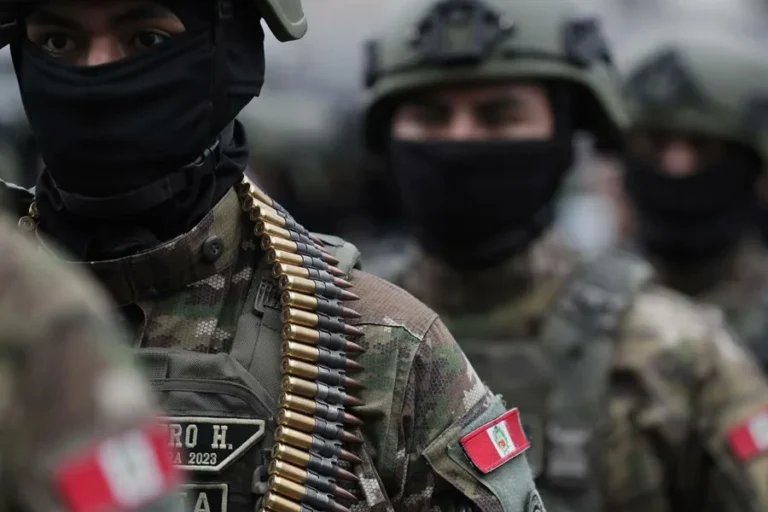
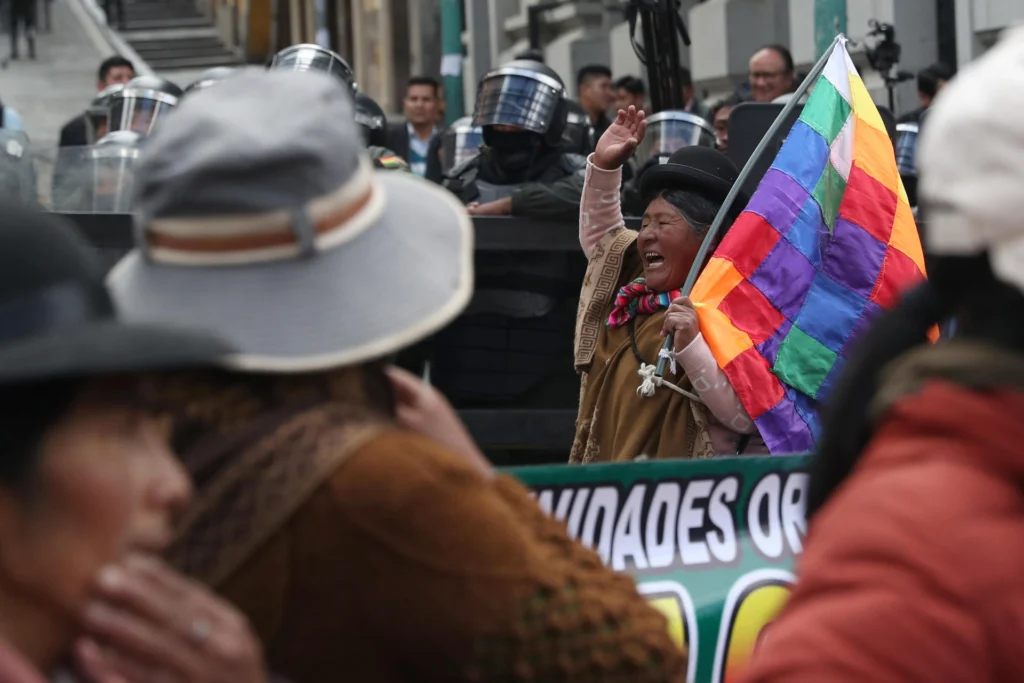
Peru’s National Coordinator for Human Rights warns that organized crime and insecurity have become part of daily life, urging structural reforms and a new social pact to restore safety and democracy. Photo: @EFEnoticias
October 8, 2025 Hour: 1:45 am
🔗 Comparte este artículo
Organized crime and public insecurity have become normalized in Peru’s daily life, posing serious threats to governance, democracy, and human rights, according to a new report released Tuesday in Lima. The study calls for structural reforms and a national social pact to confront what it describes as a deepening security and institutional crisis.
RELATED:
Peruvian Victims’ Families Denounce Ombudsman’s Support for Amnesty Laws Undermining Justice
The report, titled “Peru: Citizen Security and Human Rights,” was prepared by the National Coordinator for Human Rights (CNDH). It warns that “the absence of citizen security endangers individuals, society, the State itself, and the future of the democratic regime in a complex world undergoing a political and cultural realignment adverse to inclusive policies.”
Researcher Ricardo Soberón, the study’s author, said the document responds to “the profound deterioration of all citizen security indicators in the country,” and to a legislative trend in which “Congress has approved numerous laws and reforms that weaken the State and deepen attractive illegal economies.”
The launch included voices from Generation Z activists, transport workers—among the groups most affected by extortion—and security and human rights experts, all describing how violence has become embedded in everyday life.
“We are not talking about an isolated incident. We are talking about a situation that affects everyone in our country and that has unfortunately been growing,” said lawyer Germán Vargas, noting that the report’s recommendations should be seriously considered ahead of the April 2026 elections.
Soberón framed the crisis within a wider political struggle: “We are doing things wrong. We are in a more difficult world, and the debate is political—between applying the ‘iron fist’ or the guarantee-based approach. We reveal in the report that the iron fist does not solve any problem; it worsens it, and that a well-designed guarantee-based approach can help address those segments of organized crime that concern us.”
The study calls for a broad interinstitutional and social pact, noting that illegal economies such as informal gold mining and cocaine production employ about one million Peruvians and have penetrated public institutions.
“The only possibility is to separate the social base from criminal leaderships—to offer this million Peruvians a civic pact in exchange for basic State services while forcefully targeting the criminal elites,” Soberón explained.
The report estimates that around 200 organized crime groups operate across Peru and urges the government to strengthen Flagrancy Units, specialized courts, and financial intelligence agencies to effectively dismantle them.
The document outlines a roadmap for reform across key state institutions—the National Police, Public Ministry, Judiciary, and National Penitentiary Institute (INPE)—with proposals for short-, medium-, and long-term action to achieve sustainable security outcomes.
It also calls for a redefinition of the State’s criminal policy, including a review and possible repeal of multiple anti-crime laws passed in recent years, which the report argues have failed to reduce violence or strengthen institutions.
Addressing Peru’s prison crisis, the study recommends measured release programs, transfers between facilities, home detention with electronic monitoring, and the construction of at least five new prisons to relieve overcrowding.
“What is very clear to me is that citizen security and the protection of human rights are founding principles. They are non-negotiable and, rather, the guarantee for working effectively against organized crime,” Soberón concluded.
Author: MK
Source: EFE